Can’t Hear You, I’m Gaming: A Complete T-Shirt Design Asset for Creators
For creators, designers, and entrepreneurs in the gaming merchandise space, finding the right starting point is crucial. A compelling, editable design file can accelerate production, ensure quality, and provide the flexibility needed to adapt to market trends. The "Can’t Hear You I’m Gaming" T-Shirt Design package represents a professional-grade asset designed for seamless integration into a modern creator’s workflow.
What This Design Package Is and Its Role in Your Process
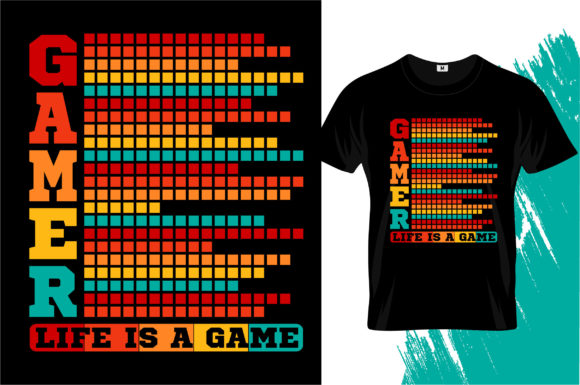
This is not just a static image. It is a complete, commercially-ready vector design centered around the popular gaming slogan "Can’t Hear You, I’m Gaming". The package includes the primary EPS source file (version 10), high-resolution PNG and JPG files, and a scalable SVG file. Each element—the text, graphics, and background shapes—is fully editable. This transforms it from a simple graphic into a foundational asset for your production process, whether you are a print-on-demand seller, a small apparel shop owner, or a hobbyist creating custom gear.
Its role fits early in the creative and production chain. It serves as a high-quality, customizable template that eliminates the need for initial conceptual design work on a common theme. You acquire a proven design concept and can immediately focus on the execution phase: customization, platform integration, and manufacturing.
Integration and Practical Use in Different Workflows
The utility of this editable design package becomes clear when examining how it interacts with common tools, platforms, and business decisions. Its compatibility is broad by design.
For Print-on-Demand and E-commerce Platforms
If your workflow involves platforms like Shopify, Etsy, Amazon Merch, or print-on-demand services such as Printful or Teespring, the provided file formats are directly compatible. The 4500×5400px, 300dpi PNG with a transparent background is ready for upload to product mockup generators. The editable EPS and SVG files allow you to adjust colors to match your store’s theme or specific product listings—changing the text color for a dark shirt or the background elements for a white shirt—before generating your final print-ready images. This maintains brand consistency across your product line.
For Local Print Shops and Small Batch Production
For those working directly with local printers or owning small-scale equipment, the EPS file is the industry-standard format for professional print software. The vector nature of the source file means it is infinitely resizable without quality loss, crucial for printing on different shirt sizes or even adapting the design for other products like hoodies or posters. You can prepare the file exactly to your printer’s specifications, adjusting color profiles and bleed areas, ensuring a smooth handoff and quality control.
Within a Larger Creative or Marketing Project
This design can also function as a component within a larger project. A marketing team creating promotional merchandise for a gaming event can quickly customize the colors to match event branding. A content creator might integrate the customized design into merchandise offered to their community. The editable files allow the asset to be adapted without requiring a designer to rebuild it from scratch, saving time and preserving resources for other project elements.
Practical Implementation and Customization Tips
To integrate this asset smoothly, a methodical approach yields the best results. Start by extracting the ZIP file using a standard tool like WinRAR or 7-Zip. Then, audit the files.
- Open the EPS source file first: Use vector editing software like Adobe Illustrator, CorelDRAW, or Affinity Designer. This is where all fundamental customization happens. Examine the layers; the design is built with editable vector shapes and text.
- Plan your color changes strategically: Consider your end product. On a dark shirt, you might want bright text and graphic colors. On a white shirt, you could use darker colors or add a subtle background shape. Change colors using your software’s global swatches or direct selection tools for efficiency.
- Use the high-resolution PNG for mockups: Once customized in your vector editor, export a new PNG with transparency. Use this clean file on your e-commerce platform’s mockup system to generate realistic product photos. The 300dpi resolution ensures crisp detail even in zoomed previews.
- Keep an organized master folder: Save your customized versions with clear names (e.g., “Gaming_Shirt_Design_Dark_Shirt_Version.eps”). This organization aids long-term use, allowing you to quickly reorder or create variants for future campaigns.
Factors for Long-Term Use and Quality Assurance
The value of an asset like this extends beyond the first order. Its long-term usability hinges on its editability and quality.
Consistency Across Products: Because you own the source file, you can produce the same design across multiple product types and colorways, creating a cohesive merchandise line. This is far more efficient than purchasing separate, non-editable graphics for each item.
Adaptation to Trends: The gaming culture and its vernacular evolve. Having an editable base allows you to potentially modify the slogan or add complementary graphics later, keeping the product relevant without a full redesign.
Quality Control: Starting with a high-quality, vector-based source file gives you control over the final output. You are not reliant on a third-party’s rendering. You can verify color accuracy, line sharpness, and alignment before sending to print, minimizing production errors.
Streamlining Your Overall Production Workflow
Integrating this pre-made, editable design into your routine fundamentally streamlines the path from idea to product. It removes the most time-intensive phase—original vector creation—for a widely appealing concept. Your process becomes one of customization and execution. This allows you to allocate more time to other critical aspects of your business: marketing, customer service, inventory management, or developing other products.
For the productivity-minded creator, it represents a practical investment. It is a reusable, adaptable tool that fits into a structured workflow, compatible with the standard software and platforms you already use. It provides a reliable starting point, ensuring that the foundational creative asset is of professional quality, while leaving you full control over the final implementation to meet your specific market needs and operational style.