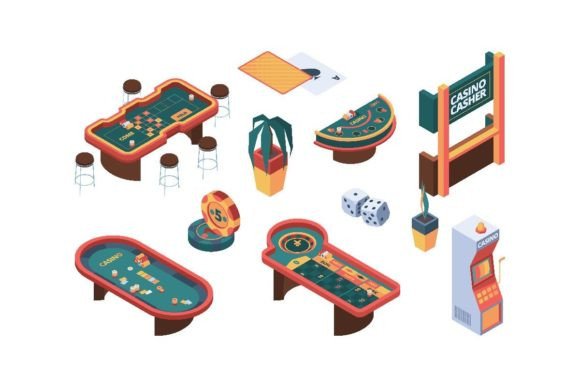
The Isometric Perspective: Deconstructing the Casino Gaming Table
The world of casino design and illustration is a unique intersection of art, mathematics, and psychology. Among its most specialized tools is the isometric view, a method of representing three-dimensional objects on a two-dimensional plane without the distortion of perspective. When applied to core gaming elements like the poker table, this technique unlocks a clarity that is invaluable for a wide range of professionals and creators. An isometric illustration of a poker gambling table is not merely an image; it is a functional blueprint, a marketing asset, and an educational device.
Geometric Precision in Gaming Spaces
Isometric projection uses a fixed angle, typically 30 degrees from the horizontal, for all three axes. This creates a visual where dimensions remain true and measurable, unlike traditional perspective drawings where objects appear smaller as they recede. For complex arrangements like a casino floor plan, this clarity is paramount. A designer can use an isometric vector of a gaming nightclub cards room to accurately place tables, slot machines, and pathways, ensuring optimal traffic flow and spatial efficiency. This geometric rigor supports practical understanding for architects, interior designers, and venue operators planning a real-world space.
Consider the task of illustrating a full gamblers people scene within a casino. A standard 3D render might prioritize dramatic lighting and atmosphere. An isometric vector, however, prioritizes the structural relationship between elements: the precise distance from the poker table to the chip rack, the orientation of the slot machines along the wall, the positioning of players around the felt. This view serves educators explaining casino layouts, researchers studying gaming behavior patterns, or developers creating simulation software where spatial accuracy is key.
The Poker Table as an Isometric Subject
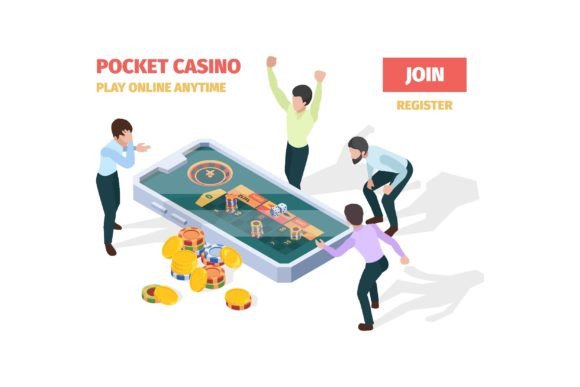
A poker table is an ideal subject for this technique. Its components—the circular or oval felt, the dealer station, the built-in chip trays, the seating positions—are all clearly defined geometric shapes. An Casino Isometric poker gambling table illustration dissects this social and gaming hub into its core parts. Each element maintains its proportional size, allowing for detailed analysis. For instance, a hobbyist designing a home game room can use such a vector to plan the exact table dimensions and seating capacity. A business owner manufacturing gaming equipment can derive precise technical drawings from the isometric art for production.
This application extends into digital realms. Game developers, particularly those working on mobile or web-based casino simulations, heavily utilize isometric assets. They provide a clean, scalable, and easily animatable foundation. The consistent angles allow for seamless integration of multiple elements—a table, cards, coins, people—into a cohesive scene without visual conflict. The resulting environment feels orderly and legible, which is crucial for user interface design where players need to quickly identify interactive elements.
Beyond the Table: The Isometric Casino Ecosystem
The utility of isometric illustration naturally expands to encompass the entire casino chance environment. A comprehensive scene might include not just the central poker gambling table stake, but also accompanying elements like a coin and slot machine illustration positioned nearby. This holistic view demonstrates the interconnected ecosystem of a gaming floor. It shows how different games relate to one another spatially, how service areas are accessed, and how lighting and decor elements are positioned.
For professionals in marketing and advertising, these vectors are powerful tools. They convey a sense of environment and activity without the clutter or subjective mood of a photographic render. An isometric view of a bustling room with gamers people can be used in brochures, websites, or app stores to explain the variety of games offered in a clear, schematic manner. It highlights characteristics like game diversity and layout sophistication without appearing overly promotional. The style itself communicates modernity, planning, and transparency.
Real-World Relevance for Creators and Consumers
The audience for this type of content is broad. Creators, such as graphic artists and vector illustrators, study these works to understand how complex scenes are constructed with geometric consistency. Educators might use them in courses on game design, probability, or even hospitality management. Consumers and hobbyists gain a clearer understanding of the physical setup of games, which can demystify the casino experience and inform their own game night preparations.
Furthermore, the isometric approach has significant advantages in documentation and instruction. Manuals for casino equipment, rulebooks for table games, or regulatory guidelines for floor layouts can integrate these illustrations to provide unambiguous visual references. When explaining the placement of a bet or the movement of a dealer, a precise isometric diagram is often more helpful than a photograph or a descriptive text alone.
Key Considerations in Isometric Casino Illustration
While the advantages are clear, creating effective isometric casino art requires careful consideration. The artist must balance detail with clarity. Overloading a scene with too many tiny details can break the clean, schematic feel. The choice of which elements to include—the cards on the table, the expressions on the gamers people, the intricate details of a slot machine—must serve the illustration's ultimate purpose. Is it a technical plan? A marketing image? An educational graphic?
Another consideration is abstraction versus realism. A highly abstracted isometric table might use simple blocks for chairs. A more realistic version might include detailed figures of players. The former is excellent for spatial planning; the latter is better for conveying atmosphere and human activity. The illustrator must decide based on the intended use case and audience.
Color and texture also play a role. Even within the constrained angles, color can be used to differentiate elements: the green felt of the poker table, the metallic gleam of the coins, the vibrant lights of the slot machine. Texture, often suggested through subtle pattern variation, can indicate materials like wood, fabric, or plastic. These touches add real-world relevance without sacrificing the geometric precision that is the method's core benefit.
Implementation in Digital and Physical Formats
The received file format, such as EPS, is crucial. EPS (Encapsulated PostScript) vectors are scalable, editable, and compatible with professional design software. This allows the end-user—whether a print shop producing large signage, a web developer coding a game, or a researcher embedding a graphic in a paper—to adapt the illustration to their specific needs. They can change colors, extract individual components (like isolating a single slot machine from a room scene), or resize the artwork without any loss of quality.
Ultimately, the isometric depiction of casino elements, from a singular poker gambling table to a complete gaming nightclub, serves as a bridge between conceptual understanding and practical application. It translates the complex, three-dimensional world of casino gaming into a clear, measurable, and versatile format. This empowers a diverse array of users to plan, create, educate, and analyze with a higher degree of accuracy and visual coherence, proving that sometimes, the most useful view is not the most dramatic one, but the one where every angle is perfectly controlled.