Wear Your Adventures: The Process and Practicality of Outdoor T-Shirt SVG Designs
For many, a simple t-shirt is just an item of clothing. For creators, entrepreneurs, and the adventure-minded community, it is a canvas. More specifically, a vector graphic file like a Travel, Adventure, Outdoor T-shirt SVG becomes a fundamental digital asset in a creative and commercial process. This isn't just about a piece of art; it's about the workflow that transforms a digital design into a tangible product, a brand statement, or a personal memento of the trails traveled.
The Core Asset: Understanding the SVG in Your Workflow
At its heart, a Travel, Adventure, Outdoor T-shirt SVG file is a scalable vector graphic tailored for apparel decoration. Unlike standard image files, an SVG is built from mathematical paths and points, not pixels. This means it can be resized infinitely without any loss of quality, a critical factor for printing on various garment sizes and materials. In a practical workflow, this file acts as the master blueprint. Before any physical product exists, this digital design is the source from which all production-ready formats are derived.
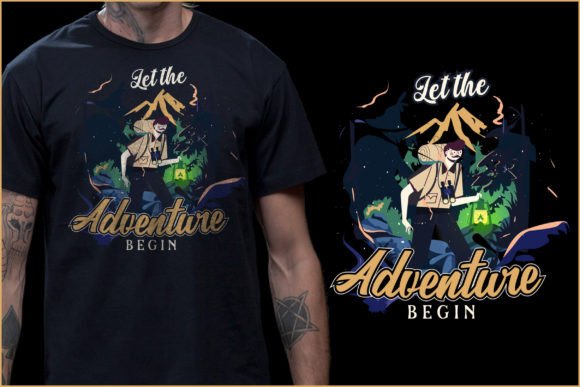
Where does it fit in the broader process? Typically, it sits at the culmination of the creative design phase and the commencement of the production and execution phase. A designer or creator finalizes their concept—perhaps a minimalist mountain range, a witty hiking quote in custom typography, or a detailed illustration of camping gear—and saves it in this versatile vector format. This SVG then becomes the key input for the next stages: uploading to print-on-demand platforms, sending to a local printer, or integrating into a larger merchandise collection.
Integration with Tools and Platforms: From Digital File to Physical Product
The true value of a well-prepared Outdoor T-shirt SVG is realized in its interaction with other tools, resources, and platforms. For the modern entrepreneur or hobbyist, this integration is often seamless but requires understanding a few key compatibilities.
Print-on-Demand Services
Platforms like Teespring, Amazon Merch, and Printful form the backbone of many t-shirt businesses. These services require high-quality, production-ready artwork. An SVG file, accompanied by its companion EPS, PNG, and PDF files in a bundled ZIP, meets this need perfectly. The process is straightforward: extract the ZIP file, select the appropriate format as required by the platform's upload guidelines, and position the design on the virtual product template. The 300 DPI resolution and transparent PNG ensure crisp prints on any shirt color. This workflow removes the need for inventory, shipping, or direct manufacturing, allowing the creator to focus on marketing and sales.
Local Printing and Personal Projects
Not all ventures are large-scale. A graphic designer might create a batch of custom hiking t-shirts for a local outdoor club. A small business owner might want branded apparel for their team. Here, the SVG bundle interacts with local print shops or even home cutting machines like Cricut or Silhouette. The SVG is specifically a "cutting file" for these devices, enabling precise vinyl application. The included EPS file is a standard for professional print shop software. Providing this complete package—AI, EPS, SVG, PNG, PDF—ensures compatibility with almost any printing method a partner might use, streamlining communication and reducing back-and-forth file conversion requests.
Practical Implementation: Organizing Your Design-to-Sale Workflow
Adopting this asset into your routine requires a touch of organization and attention to quality control. The goal is efficiency and consistency, especially if you manage multiple designs or a full merchandise line.
Start with a dedicated digital library. Store your master ZIP files for each design—"Mountain Sunset SVG Bundle," "Hiker Typography Bundle"—in a clearly structured cloud folder or local drive. Label them not just by name, but by intended use: "For POD," "For Vinyl Cut," "For Large Format Print." This simple step saves hours when you need to revisit a design for a new product, like applying the same adventure graphic from a t-shirt to a mug or a bag, which these file formats readily allow.
Before integration, always conduct a pre-flight check. Even with 300 DPI and transparent backgrounds, open the PNG file at its 4500×5400 size and zoom in. Look for any stray pixels, ensuring the transparency is clean around the edges of your design. Preview the SVG in a free online viewer or your design software to confirm all paths are closed and the scaling works flawlessly. This minute of quality control prevents a costly misprint batch.
A Workflow Example: Launching a Themed Collection
Imagine you are a blogger focusing on national park travel. You wish to launch a small collection of apparel featuring iconic park landmarks. Your process might be:
- Creation: Design your vector artwork in your preferred software (e.g., Illustrator), finalizing it as your master SVG.
- Preparation: Export and bundle the required AI, EPS, SVG, PNG, and PDF files into a ZIP archive for each park design.
- Organization: Store these bundles in a project folder labeled "National Park Series 2024."
- Integration: Upload the transparent PNG files to your chosen Print-on-Demand platform (e.g., Printful), linking them to t-shirts, hoodies, and tote bags in your store.
- Extension: Use the same SVG files with a local supplier to produce physical vinyl decals or posters for an upcoming meet-up, leveraging the file's scalability.
This unified approach, centered on a robust digital asset, creates consistency across products and channels.
Long-Term Use and Strategic Considerations
Thinking beyond a single launch, these design files represent a long-term asset. Their vector nature means they are future-proof. If a new printing technology emerges or a platform changes its preferred format, your SVG can be adapted. It is the source file. For a small business owner building a brand, this is crucial. The adventure-themed logo or typography you use today on a t-shirt can be used tomorrow on your website, in promotional brochures (via the PDF), or on large-format banners at an event, all without redesign costs.
Usability also extends to collaboration. If you work with a marketing assistant or a partner, providing them with this complete, extracted file bundle is far more professional and efficient than sending a single low-resolution JPEG. It empowers them to execute tasks without constant requests for different file types, fostering a smoother operational workflow.
Making It Your Own: Smooth Integration into Creative and Commercial Routines
The final step is personalization. How you integrate Travel, Adventure, Outdoor T-shirt SVG assets depends on your primary goal. For the freelancer offering custom t-shirt design services, these files are the deliverable. Your process ends with handing over this bundle to the client, giving them full autonomy for their production. For the educator running an outdoor program, it might be about creating morale-boosting apparel for participants; the workflow is a one-off project with a clear, tangible outcome.
The key is to see the SVG not as an isolated graphic, but as the central, versatile component in a chain of actions. It bridges the gap between creative idea and commercial reality, between digital art and physical merchandise. By understanding its role, preparing it thoroughly, and organizing its use, you turn a simple design file into a powerful tool for expression, community building, or business growth. Your adventure isn't just on the trail; it's on the shirt, and the process to put it there is clearer than ever.