Visualizing the Game: The Power of Tennis Championships Banners and Vectors
In the world of tennis, the action on the court is electrifying. But the visual world surrounding the sport plays a crucial role in capturing its spirit, promoting its events, and defining its identity. When you picture a major tennis championship, like those sanctioned by the International Tennis Federation, certain iconic images come to mind: the vibrant yellow ball in flight, athletes in dynamic motion, and, importantly, the bold graphics that announce the event itself. This is the realm of the Tennis Racket Sport Championship Banner and its versatile counterpart, the Tennis Racket Sport Championship Banner Vector. These are not mere decorations; they are fundamental tools for communication, marketing, and artistic expression in the sport.
From Concept to Courtside: Understanding Championship Graphics
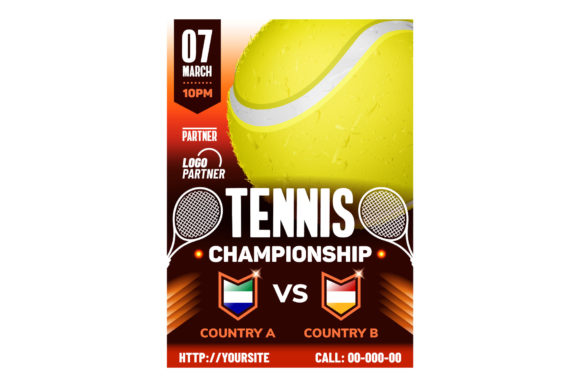
Let's start from the ground up. A Tennis Racket Sport Championship Banner is typically the final, rendered graphic you see in the real world. Think of the large banners hanging outside stadiums like Roland-Garros or Wimbledon, the promotional posters in city centers, or the digital ads on sports websites. These are often delivered in formats like JPG, high-resolution images ready for print or digital display. They are the finished product, a colored concept mockup illustration brought to life, designed to grab attention and convey key information: the tournament name, dates, sponsors, and that unmistakable atmosphere of an active recreational sportive game.
The Creative Engine: The Vector File
The magic, however, often begins with the Tennis Racket Sport Championship Banner Vector. A vector graphic, usually saved in formats like EPS, is a different kind of digital asset. Unlike a JPG, which is made of pixels and has a fixed resolution, a vector is built from mathematical paths and points. This means it can be scaled up or down infinitely without any loss of quality. For designers and organizers, this is invaluable.
- Flexibility: The same vector file can be used to create a massive billboard, a small web icon, or printed merchandise.
- Editability: Every element—the racket, the ball, the text, the colors—can be easily modified, allowing for last-minute changes or the creation of variant designs for different markets.
- Professional Consistency: It ensures the tournament's visual identity remains sharp and consistent across all mediums, from the official program to social media banners.
In essence, the JPG is the final presentation, while the EPS vector is the creative blueprint.
Purpose and Significance: Beyond Just Announcements
The purpose of these banners extends far beyond simply stating "Tournament Happening Here." Their significance is multi-layered and deeply practical in the modern sports ecosystem.
Building Brand and Atmosphere
For any championship, especially under the prestige of the International Tennis Federation, branding is paramount. A well-designed banner serves as the visual cornerstone of the event's brand. The choice of colors, the style of the racket illustration, the depiction of the gaming yellow ball—all these elements work together to create a specific atmosphere. A vibrant, energetic mockup might signal a fast-paced, modern tournament. A classic, elegant design evokes tradition and grandeur. This visual identity builds anticipation and sets the emotional tone for fans even before the first serve.
The Engine of Promotion and Commerce
In practical terms, these graphics are the frontline soldiers of promotion. They are used in:
- Digital Campaigns: As ads on sports news sites, in email newsletters, and across social media platforms.
- Physical Marketing: On posters, flyers, and banners in host cities to drive ticket sales and local engagement.
- Broadcast and Media: As on-screen graphics during televised coverage, reinforcing the event's identity for millions of viewers.
- Merchandising: The core design elements from the vector are applied to apparel, programs, and souvenirs, turning promotion into revenue.
This is where the promotion poster function is fully realized, transforming an artistic illustration into a powerful commercial tool.
Fitting into Modern Digital Life and Business
The relevance of these assets has exploded in the digital age. For general readers, it's helpful to understand how this niche design topic connects to broader trends in technology, business, and daily online life.
In today's content-driven world, visual material is paramount. A sports federation or event organizer operates much like any modern business or creative entity. They need a strong, adaptable visual library. The vector file format (EPS) is a standard in professional design and printing industries, analogous to how a software company might use source code. It allows for agile responses: quickly creating region-specific versions of a banner or adapting the design for a new sponsorship partner.
Furthermore, these graphics are central to fan engagement in the digital space. The banner imagery becomes the profile picture for the event's Facebook page, the header on its Twitter account, and the thumbnail for its YouTube highlights. It’s the visual cue that helps fans navigate the online ecosystem of the tournament, making the sport more accessible and integrated into their daily social media activities.
Clarifying a Common Misunderstanding
A common assumption is that these banner designs are simply "photos of tennis." This is rarely the case. They are usually custom illustrations or sophisticated composite mockups. Designers combine rendered elements—a stylized racket, a perfectly placed ball, dynamic player silhouettes—with typography and logos to create an idealized, impactful scene. This controlled artistry allows them to emphasize specific themes (like speed, precision, or legacy) that a single photograph might not capture as effectively.
Building a Broader Understanding: The Art of Sport Communication
To fully grasp the subject, consider it as a key piece in the larger puzzle of sports communication. The Tennis Championship Banner and its vector source file sit at the intersection of:
- Sports Management: Logistics and promotion of a major event.
- Graphic Design: Application of color theory, composition, and typography.
- Brand Marketing: Building and maintaining a prestigious sporting identity.
- Digital Technology: Utilizing appropriate file formats for various platforms.
Examples in other sports are abundant. The iconic NBA Finals logo, the dynamic graphics for the FIFA World Cup, or the elegant motifs for the Olympic Games all function similarly. They start as versatile vector-based designs and manifest as the banners, posters, and digital assets that define the event's visual presence globally.
A Tool for Creativity and Education
Even beyond professional use, these concepts have creative and educational relevance. For a student learning graphic design, deconstructing a tennis championship banner mockup is a practical lesson in layout, sports iconography, and commercial art. For a hobbyist creating a poster for a local club tournament, understanding the difference between a scalable vector and a fixed-resolution JPG can dramatically improve the quality of their output. The "colored concept mockup illustration" serves as both a professional benchmark and an inspirational starting point.
Conclusion: The Unseen Framework of the Game
While the athletes battle for glory on the court, a parallel framework of visual communication works to amplify their struggle, celebrate the sport, and invite the world to watch. The Tennis Racket Sport Championship Banner—and the powerful, adaptable vector file from which it is born—is a vital component of this framework. It translates the raw energy of an active recreational sportive game into a structured visual language that promotes, brands, and commemorates. From the offices of the International Tennis Federation to the screens of fans worldwide, these designs do more than decorate; they inform, excite, and unite the global tennis community around the simple, powerful spectacle of a yellow ball in motion.